
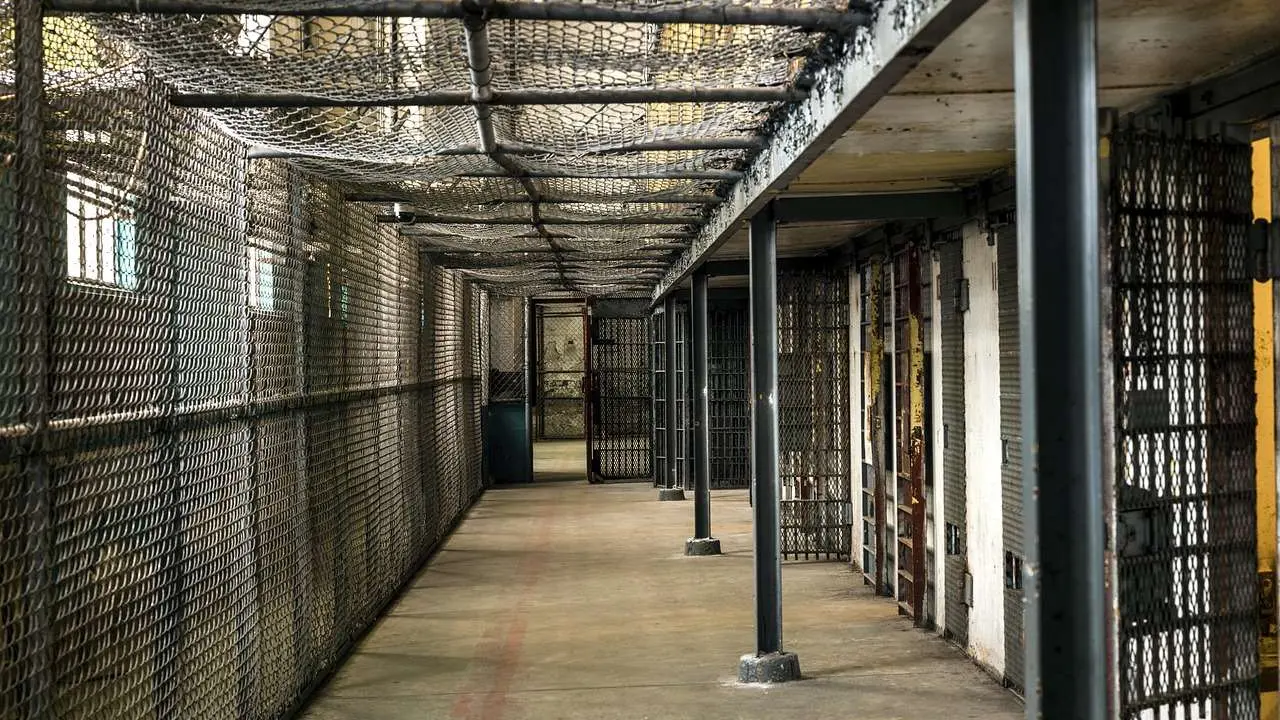
If you’re wondering what is mass incarceration, it means the United States confines a historically large share of its people. Nearly two million are in prisons and jails, up from 360,000 in the early 1970s.
This guide sits within the wider topic of criminal justice reform, where you can follow related policy debates.
| Item | Value |
|---|---|
| People supervised through prisons, jails, probation and parole | Almost six million |
| U.S. incarceration rate | 614 per 100,000 people |
| Imprisonment rate in 1972 | 93 per 100,000 people |
| Prison population growth, 1973 to 2009 | Seven-fold increase |
| Annual cost of the criminal legal system | $445 billion |
These figures come from The Sentencing Project’s April 2026 report and the Prison Policy Initiative’s fact sheet. Figures can change as new data is released, so check the source before you rely on them.
What mass incarceration means
Mass incarceration describes confinement on a scale far beyond what peer countries show. An academic review defines it as the widespread incapacitation of people in prisons and jails, and finds it does not affect all groups equally.
The numbers are large however you count them. The Sentencing Project says prisons, jails, probation and parole supervise almost six million people, while the Prison Policy Initiative counts about 2 million people locked up on any given day.
The Prison Policy Initiative’s breakdown looks like this:
- 1.3 million people in state and federal prisons
- 546,000 people in local jails
- 3.7 million people on probation or parole, more than are held in jails and prisons combined, according to a 2023 briefing
The scale also stands out internationally. The Sentencing Project says the United States ranks among the highest worldwide in its dependence on incarceration, and the academic review found people in the U.S. are more than 10 times as likely to be in prison or jail as people in Denmark, Sweden or the Netherlands. The Prison Policy Initiative puts the U.S. rate at 614 per 100,000 people.
An excerpt of the National Research Council’s 2014 report adds that in 2012 close to 25% of the world’s prisoners were held in American prisons, although the country has about 5% of the world’s population.
How did the prison population grow so fast?
In 1972 the imprisonment rate was 93 per 100,000 people, according to The Sentencing Project. The expansion that began in 1973 reached its peak in 2009, a seven-fold increase over those years.
One stretch was especially fast: across a decade of the late twentieth century the total prison population grew very fast every year. Over the last 50 years, the Prison Policy Initiative puts growth in the state and federal prison population at about 540%.
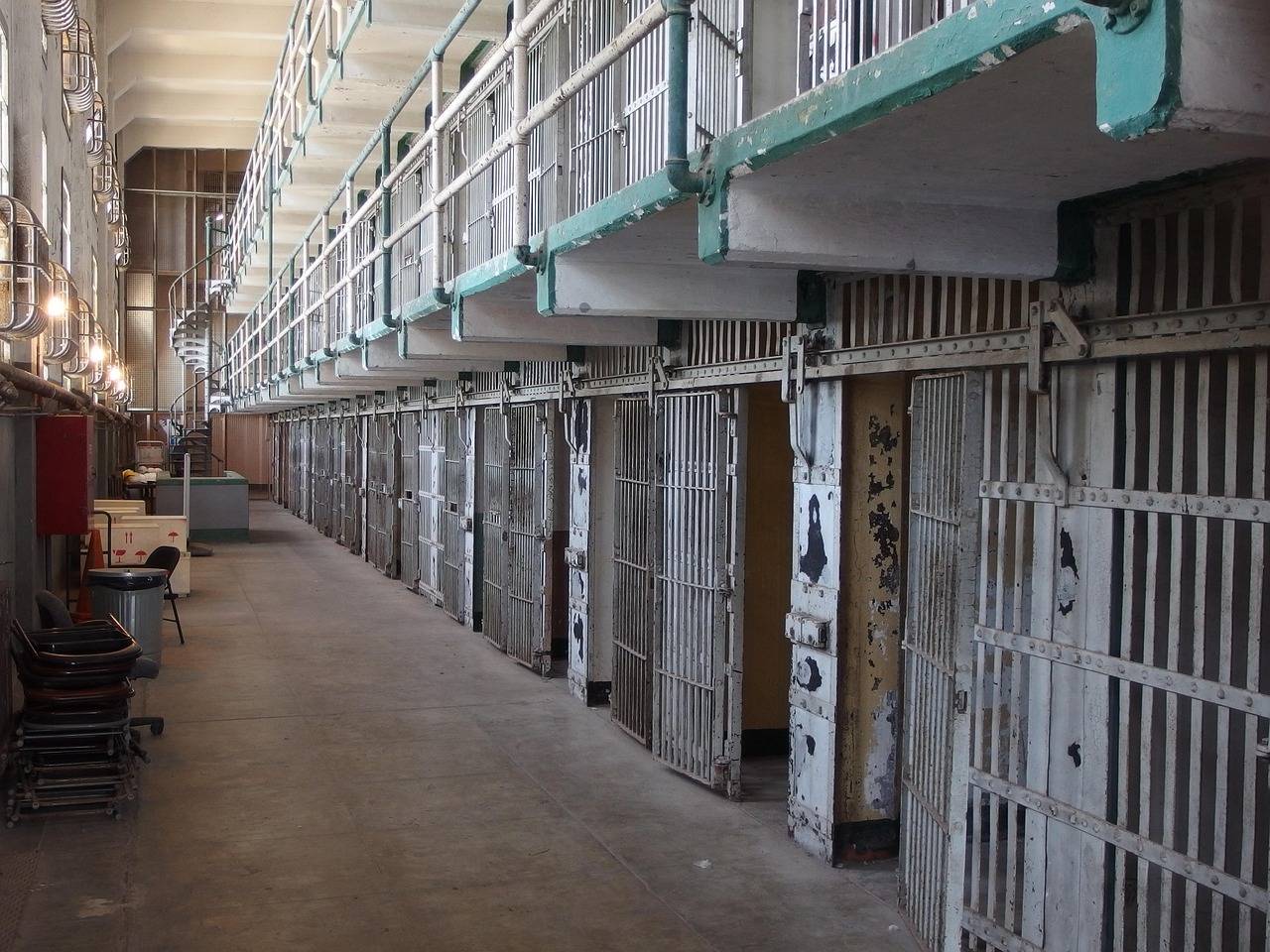
Since the peak, the trend has moved in several directions, according to the same Sentencing Project report:
- A marginal decline began in 2010 and continued for more than a decade.
- In 2020 the prison population fell 14%, largely because of reduced admissions in the first year of the COVID-19 pandemic.
- It rose 2% in 2022 and by an additional 2% in 2023.
Supervision grew as well. Between 1980 and 2023, the number of people on probation nearly tripled and the number under parole supervision more than tripled.
What drives mass incarceration
The Sentencing Project, an advocacy organization, argues that changes in sentencing law and policy, not crime, account for the majority of the increase in correctional supervision. The academic review points in a similar direction, noting that the U.S. kept incarcerating a historically large share of its population despite two decades of declining crime rates.
Several drivers show up in the data:
- Drug policy: the Sentencing Project says the system grew from a response to rising crime and the expansion of punitive drug policies, and roughly half (45%) of people in federal prison have been convicted of drug offenses.
- Long sentences: 23% of people in state prisons at the end of 2021 had already served over 10 years, according to the Prison Policy Initiative, and the Sentencing Project says long-term and life sentences continue to expand.
- Pretrial detention: local jail populations grew by approximately 250% between 1983 and 2023, and the Prison Policy Initiative names increased use of pretrial detention as the main reason.
Jails matter here because 80% of local jail detainees are being held pretrial, and the median felony bail bond was $10,000 in 2009, per the Prison Policy Initiative fact sheet. A 2023 briefing notes that amount equals eight months of income for the typical detained defendant, which is why debates over cash bail reform centre on this part of the system.
Reform is not only about minor offenses. In state prisons, 62% of people have been convicted of a violent crime, compared with 30% in 1970, so the debate reaches serious offenses and long sentences, not only low-level ones.
Who bears the heaviest burden
Incarceration is unevenly distributed. The academic review finds it is disproportionately concentrated among men, African Americans, and people with low levels of formal schooling.
The Prison Policy Initiative shows the gap in rates per 100,000 people:
- Prison incarceration rate: 1,096 for Black people and 214 for white people.
- Jail incarceration rate: 600 for Black people and 184 for white people.
A 2023 briefing adds that every state locks up Black people at a higher rate than white people.
Women are a smaller share but still count 190,600 people locked up on any given day, according to the fact sheet. The briefing reports that most women in jails and in prisons are mothers, and most are the primary or sole caretakers of young children.
Effects on families, housing and work
According to The Sentencing Project, imprisonment leads to declining prospects for employment and lower earnings in the longer term. Food insecurity, housing instability and reliance on public assistance are also associated with prior imprisonment.
The Prison Policy Initiative puts numbers on the housing link. Of people in state prisons, 22% were homeless or housing insecure shortly before incarceration (2016), and formerly incarcerated people were 10 times more likely to be homeless than the average person (2009). Their unemployment rate was 27% in 2009.
A record can extend the problem. More than 79 million people in the U.S. have a criminal record, creating barriers to housing, jobs, healthcare and food assistance, according to the 2023 briefing. How long a record follows someone is the focus of clean slate laws, a related reform topic.
Families absorb the impact too. The same briefing says half of all Americans have an immediate family member who has been incarcerated, and 2.6 million children have a parent in prison or jail. The Sentencing Project adds that a parent’s imprisonment leads to significant declines in children’s academic and health outcomes.
Political participation is affected as well. As of 2010, nearly 6 million people were disenfranchised because of a felony conviction, about 1 in 40 adults, according to an excerpt of the National Research Council report.
Finally, there is the cost. The Prison Policy Initiative estimates the annual cost of the criminal legal system at $445 billion, including $116bn for prisons, jails, probation and parole.
Reform progress and pushback
As of The Sentencing Project’s April 2026 report, states have begun to experiment with sentencing reforms, alternatives to incarceration and shifts in drug policy. Past federal reforms also reduced excessive and racially disparate sentences.
The same report warns that long-term and life sentences continue to expand and that many policymakers are seeking to roll back recent reforms. Immigration detention is moving in the opposite direction from some other trends: the Prison Policy Initiative’s fact sheet, using data available as of March 2026, reports a 32% increase between 2025-26 in the number of people held for immigration reasons.
Frequently asked questions
What is mass incarceration in simple terms?
Show answer
It describes a country holding an unusually large share of its people in prisons and jails. An academic review calls it the widespread incapacitation of people in prisons and jails, and The Sentencing Project says nearly two million people are living in prisons and jails.
How many people are locked up in the United States?
Show answer
The Prison Policy Initiative counts about 2 million on any given day, including 1.3 million in state and federal prisons and 546,000 in local jails. Counts differ by source and method and change over time, so check the source before relying on them.
Is mass incarceration caused by rising crime?
Show answer
Not mainly, according to The Sentencing Project, which ties most of the growth in supervision to sentencing choices rather than crime levels. That view comes from an advocacy group, so the drivers section above also lays out the other factors the data points to.
How does mass incarceration affect housing?
Show answer
The Prison Policy Initiative reports that formerly incarcerated people were 10 times more likely to be homeless than the average person (2009 data). A 2023 briefing says more than 79 million people have a criminal record, which creates barriers to housing.