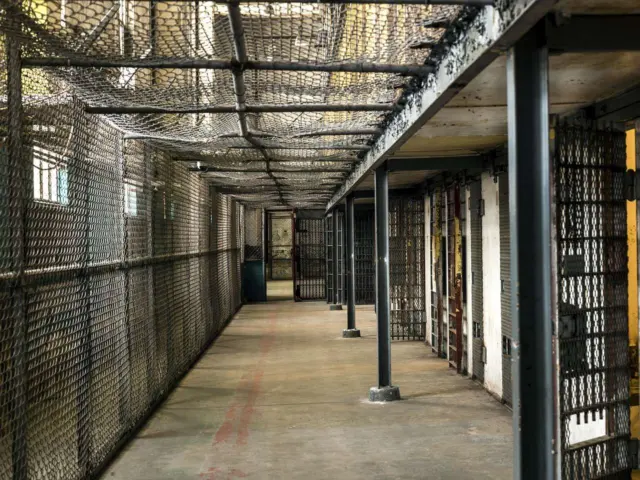

If you have a record and want a licensed trade, occupational licensing barriers for felons can feel like a locked door. Many states have limited those bans, but rules vary widely, so check your state’s law before paying for training.
For the wider picture on sentencing, records and life after release, see the site’s guide to criminal justice reform.
| Item | Value |
|---|---|
| Adults with a record in the criminal justice system (2016 report) | Nearly one in three U.S. adults |
| U.S. workers who need a state license (2016 report) | More than one-quarter |
| State occupational licensing restrictions in the ABA inventory (2016 report) | 27,254 restrictions |
| Permanent disqualifications in that inventory (2016 report) | Over 19,000 |
| Chance of a hiring callback with a record versus without (2016 report) | Only half as likely |
| Laws limiting how records are weighed, enacted since 2017 (2024 round-up) | 86 laws in 44 states and D.C. |
The figures come from the National Employment Law Project’s April 2016 report and the Collateral Consequences Resource Center’s August 2024 round-up. They can change as laws and inventories are updated, so check the source before you rely on them.
How licensing turns a record into a career barrier
A state license is government permission to work in an occupation, and passing a criminal background check is a common requirement. The National Employment Law Project (NELP) reported in its April 2016 report that more than one-quarter of U.S. workers need a state license. That includes jobs in sales, management and construction, not only nursing and teaching.
One example in that report is a Wisconsin daycare owner whose daycare-owner certification was permanently revoked after a change in state law, because of a 30-year-old misdemeanor conviction for overpayment of public assistance (NELP, 2016).
The scale of the rules is large. NELP’s report says the American Bar Association’s inventory of penalties documented 27,254 state occupational licensing restrictions. Over 12,000 of them cover any type of felony and over 6,000 cover misdemeanors (NELP, 2016).
NELP noted in 2016 that no national data exists on how many people are denied licenses because of these penalties (NELP, 2016). The closest comparison is hiring: people with records are on average only half as likely to get a callback as those without a record, and only one in three Black men with records receive one.
Because the criminal justice system disproportionately impacts people of color, NELP argues these penalties perpetuate racial disparities in employment (NELP, 2016). The CSG Justice Center adds that access to meaningful employment is a key component in reducing recidivism.
Work is one piece of rebuilding a life after a conviction, and the guide to restoring voting rights after felony conviction covers another.
The rules that cause the most trouble
NELP’s 2016 report points to several recurring problems in state licensing laws:
- Mandatory bans. The ABA inventory reports over 11,000 mandatory disqualifications, where agencies have no choice but to deny a license (NELP, 2016).
- Lifetime bans. It also reports over 19,000 permanent disqualifications that could last a lifetime (NELP, 2016).
- Broad record questions. NELP says no research supports the misconception that a workplace is less safe if an employee has a past record, so far-reaching inquiries often work as bans on anyone with a record (NELP, 2016).
- Vague wording. Terms such as “good moral character” or “moral turpitude” leave workers without clarity as to whether a past conviction is a disqualification (NELP, 2016).
- Patchwork rules. Requirements for a single occupation vary widely across states, as do the standards used to judge past offenses (NELP, 2016).
Some protection already existed in 2016. NELP counted general licensing laws in 39 states and the District of Columbia that, to some degree, restrict most boards’ consideration of arrest and conviction records, while 11 states had no such law (NELP, 2016).
How states are reforming licensing laws
As of the Collateral Consequences Resource Center’s (CCRC) August 2024 round-up, 44 states and the District of Columbia had enacted 86 separate laws since 2017 to limit state power to deny workplace opportunities based on criminal history.
The same round-up says fair chance licensing reforms appear less politically controversial than some others. CCRC’s 2020 national survey found that high marks for reining in licensing boards went to some states not ordinarily considered politically and socially progressive.
In November 2021, the CSG Justice Center launched a Fair Chance Licensing Project to track new reforms across all 50 states (CSG Justice Center, 2021).

NELP’s July 2019 fact sheet counted at least nine states that adopted reforms that year: Arkansas, Iowa, Maryland, Mississippi, Oklahoma, Nevada, North Carolina, Texas and Utah. The details differ, so these examples show a range of tools rather than one model:
- Tennessee (2018): boards must weigh the age and nature of the offense and evidence of rehabilitation or treatment, and must give written notice explaining a denial (NELP, 2018).
- Oklahoma (2019): licensing entities must list disqualifying offenses for each occupation, and applicants may petition for an initial written determination (NELP, 2019).
- Mississippi (2019): an applicant may at any time petition for a written determination and may request a hearing to contest an unfavorable decision (NELP, 2019).
- South Dakota (2024): a preliminary determination process lets potential applicants learn whether their record would disqualify them before they invest in costly training (CCRC, 2024).
- Colorado (2024): an agency may consider a conviction only for a 3-year period from conviction or the end of incarceration, whichever is later (CCRC, 2024).
- Nebraska (2024): denials were to be limited to a list of 27 serious violent or fraud offenses, a limit the round-up says would start the following year (CCRC, 2024).
Why do reforms still leave gaps?
Reforms are uneven. CCRC’s August 2024 round-up says Nebraska’s 2024 law excludes a number of licensing agencies from the reach of the state’s reforms, including those previously enacted in 2018. CCRC called that an unfortunate limitation in an otherwise impressive reform (CCRC, 2024).
NELP’s 2019 fact sheet called Iowa’s law a limited reform, covering the Electrical Examining Board and the Plumbing and Mechanical Systems Board. Maryland’s law that year bars six state departments from denying a license solely over a nonviolent conviction once at least seven years have passed since the person completed sentencing (NELP, 2019).
A 2020 CCRC survey found that only two states, Illinois and Minnesota, scored at the top for both fair chance employment laws and occupational licensing laws. A reform in the news may therefore not cover the occupation you want.
What to check before you invest in training
This is general education, not legal advice, and details differ by state and occupation. These steps follow the features that the sources above describe:
- Read both laws. NELP notes that the statutes governing individual professions often differ from the general state licensing statutes, so check the occupation’s own rules as well (NELP, 2016).
- Ask about an early ruling. Some states let you petition a board to learn whether your record disqualifies you, including Nevada, which requires most state and county licensing authorities to run a petition process (NELP, 2019).
- Check the look-back window. Some laws limit how long an agency can consider a conviction or which offenses can disqualify you.
- Gather evidence of rehabilitation. Where boards must weigh it, records of treatment, work history and time since the offense can matter.
- Ask for reasons in writing. Where the law provides for it, a written explanation and a hearing give you something to respond to.
- Look at record relief. CCRC says expungement and pardon help on a case-by-case basis for those who are eligible and able to access them (CCRC, 2020).
NELP also lists a campaign toolkit that gives state lawmakers and advocates resources to push for reform. If you want to push for change in your own state, how to advocate for criminal justice reform is a place to start.
Frequently asked questions
Can a felony conviction automatically disqualify me from a license?
Show answer
In some places, yes. The ABA inventory, as NELP reported in 2016, lists over 11,000 mandatory disqualifications where agencies must deny a license (NELP, 2016). Many later reforms replaced blanket bans with case-by-case review, so your state’s current text matters.
What does “directly related” mean?
Show answer
It is a test that asks whether a conviction connects to the duties of the licensed job. NELP’s 2018 fact sheet says Tennessee’s law requires boards to demonstrate that a conviction is “directly related” to the licensed occupation (NELP, 2018).
Can I find out whether my record disqualifies me before paying for training?
Show answer
Some states allow it. Examples in the sources include Oklahoma and Mississippi in 2019 (NELP, 2019) and South Dakota in 2024 (CCRC, 2024). Check whether your state and occupation offer it.
Is licensing reform a one-party issue?
Show answer
The sources suggest not. CCRC’s August 2024 round-up says these reforms appear less politically controversial than some others (CCRC, 2024).